Why RockStar Law
Experiential Learning: Why Creating “Legal Experiences” Skyrockets Student Engagement

Experiential learning increases student engagement by turning legal doctrine into lived legal decision-making. When students are placed in realistic roles — attorney, client, judge, negotiator, drafter, or advocate — they begin to see law not as a set of abstract rules, but as a practical tool for solving problems, managing risk, and shaping outcomes.
Students do not become engaged by memorizing rules in isolation. They fall in love with the practice of law when they are allowed to engage, when the law becomes a situation, a conflict, a client problem, a strategic choice, or when something feels at stake.
Instead of asking students to simply learn about the law, experiential learning asks them to practice thinking, speaking, arguing, negotiating, drafting, advising, and problem-solving like lawyers.
Students step into a role where they get to feel like lawyers. That is why “legal experiences” are so powerful.
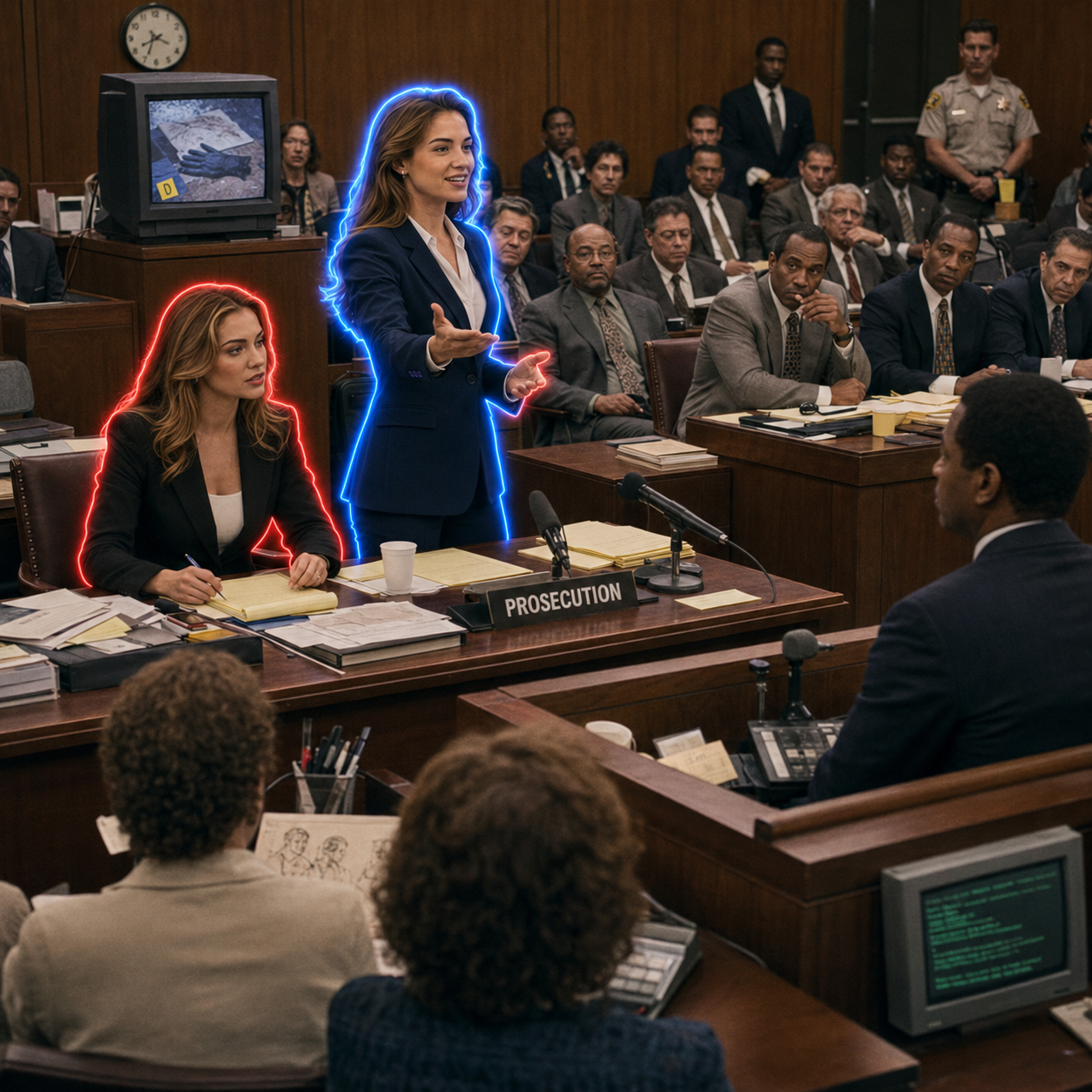
Legal & business education becomes more engaging when students are placed inside a realistic legal moment: A client walks in with a problem. This contract clause creates risk. Her celebrity image was used without permission. The studio wants to avoid litigation. His start-up needs advice before launching… Suddenly, a rule is not in the abstract any longer. Suddenly the rule matters. Students begin asking:
What facts matter? What does my client want?
What is the legal risk? What is the strongest argument?
What would I actually do? What would opposing counsel say?
That shift turns passive learning into active legal thinking.

Experiential learning works because it combines four things students crave:
1. Relevance: Students engage when they understand why the law matters in the real world.
A copyright rule becomes more exciting when connected to TikTok, music sampling, AI art, movies, games, influencers, or celebrity branding.
2. Role: Intimate Participation.
When students are given a role — attorney, judge, client, studio executive, agent, producer, founder, plaintiff, defendant — they stop being observers.
3. Conflict: Law is built around conflict: rights, duties, risks, leverage, remedies, reputation, money, control.
Experiential exercises let students feel the tension of legal decision-making.
4. Consequence: Simulated stakes create emotional investment.
When students must make a choice, defend a position, negotiate a deal, or advise a client, the lesson has stakes.

What Counts as a “Legal Experience”?
A legal experience can be simple or elaborate. It does not need to be a full mock trial. Examples include:
- Client intake simulations: Students interview a client and identify legal issues.
- Contract redline exercises: Students revise a deal and explain the business/legal risk.
- Oral Arguments: Students argue both sides of a case in short rounds.
- Negotiation Exercises: Students represent opposing parties and try to reach a deal.
- Cease-and-Desist Drafting & Responses: Students write a real-world legal letter based on facts.
- Entertainment law hypotheticals: Students advise actors, studios, influencers, musicians, game developers, or content creators.
- Case-to-client transformation: Students take a case rule and apply it to a modern client scenario.
- Risk memos: Students explain whether a business should proceed, modify, license, settle, or stop.
Why It Skyrockets Engagement
Experiential learning makes students feel like the class is not just preparing them for an exam. It is preparing them for the future. That is a major psychological shift.
Students engage more when they feel: “I can actually do something with this.” They are no longer just learning doctrine. They are developing judgment.
And legal judgment is what separates someone who knows a rule from someone who can use the rule.