



Your trademark is how customers recognize your brand in the marketplace. It tells them, “This champagne, sneaker drop, nightclub, record label, or luxury candle came from us — not those other people trying to sneak into VIP.” If your trademark is too similar to another trademark, and the goods or services are related, customers may think both brands come from the same source, sponsor, owner, or rich-person empire. That mistake is called likelihood of confusion, and it is the most common reason the USPTO refuses registration. The best way to avoid this problem is to do a serious clearance search before filing. Do not just Google it from the back of a Rolls-Royce and call it legal research.
Similarity of Trademarks
Trademarks do not have to be identical to cause confusion. They can be similar in sound, appearance, meaning, or overall commercial impression.
Sound
Marks may be confusingly similar if they sound alike, even when spelled differently. For example, KANDI and CANDY may look different on the guest list, but the bouncer hears the same name.
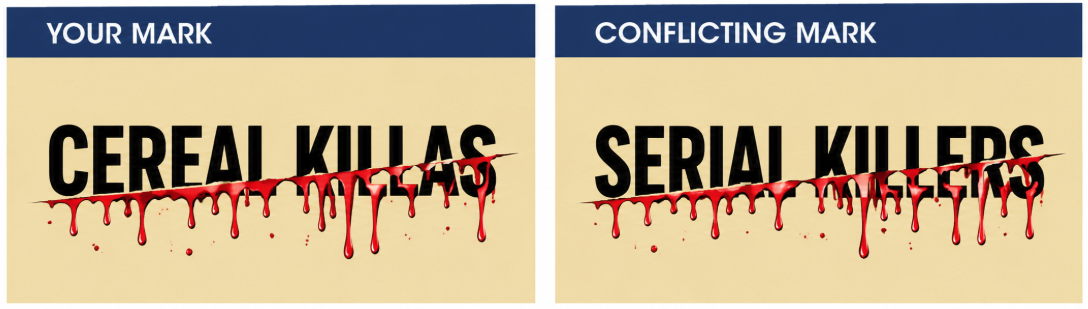
Appearance
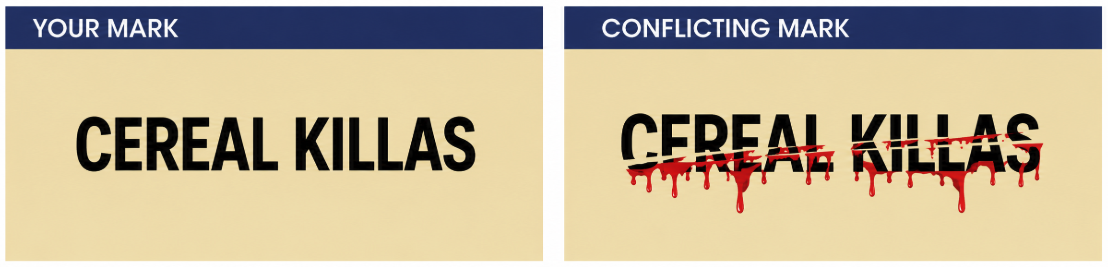
These marks can be confusingly similar because they look alike, even if one is plain text and the other shows up in a fancy font with bottle-service energy. A standard-character mark protects the wording itself, no matter how it is displayed. So changing the font, style, or logo treatment does not automatically avoid confusion. The words are still the words.
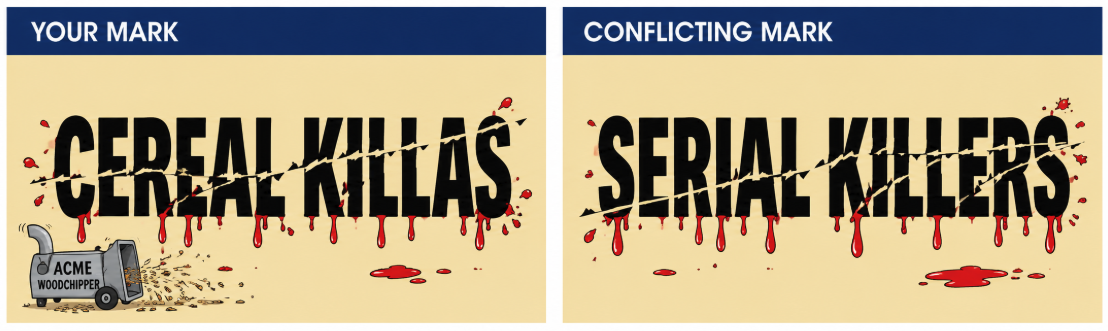
Commercial Impression
These marks can be confusingly similar because they give off the same overall brand vibe. They create the same visual impression, even if one version adds words. That can happen when both marks use the same dominant design element. If the main image is doing the branding, adding a few words is not always enough to make it feel like a different party.
Related Goods and Services
Even if two marks are similar, confusion also depends on whether the goods or services are related. Trademark law asks whether customers might think they come from the same source, sponsor, or business empire. That is why different owners can register identical marks for unrelated things, like DOVE soap and DOVE ice cream bars, or DELTA faucets and DELTA airline services. Same name, different party. The problem starts when the products or services are close enough that consumers might expect one brand to be behind both.
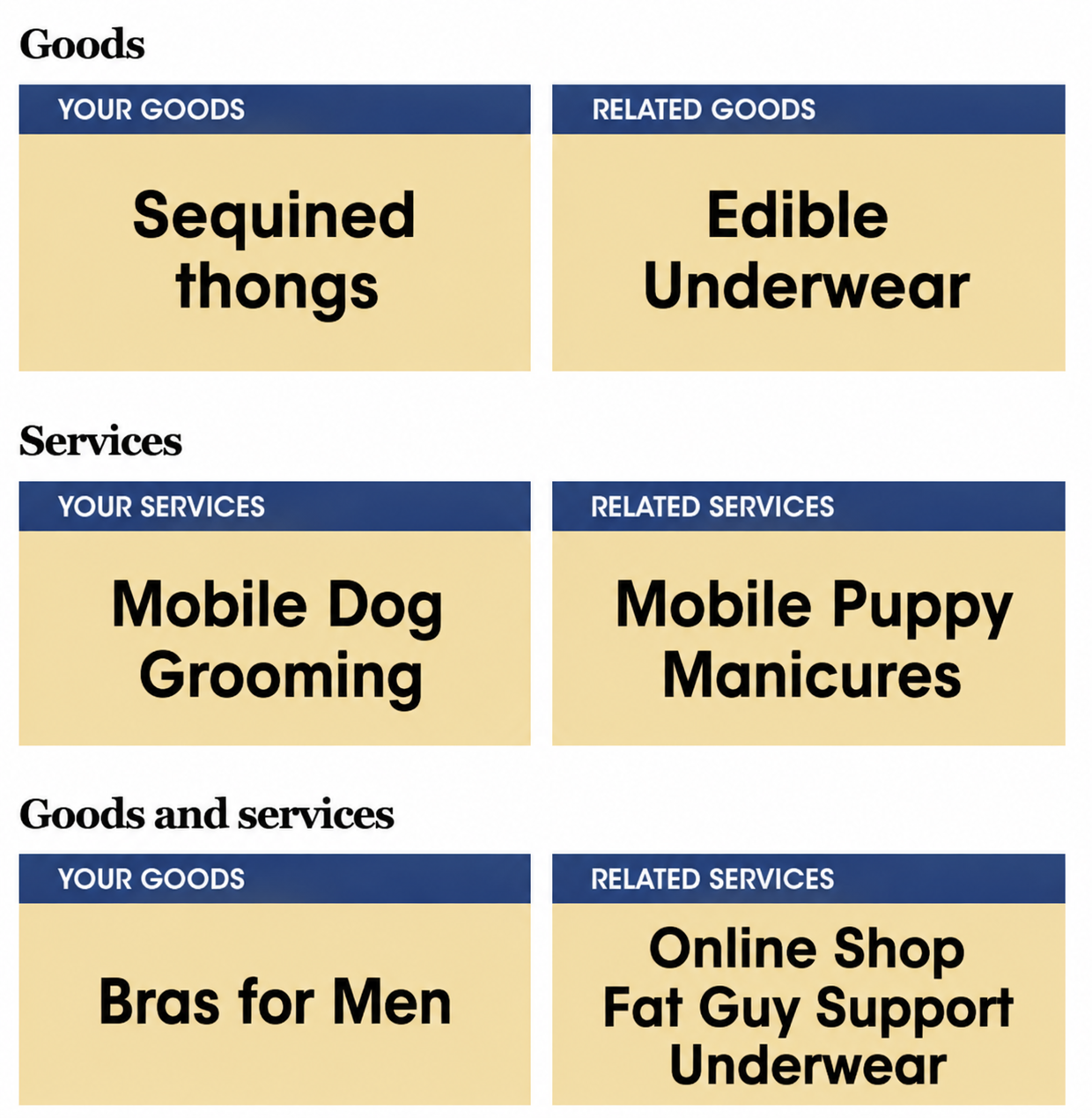
Goods or services may be related if they are identical, similar, competitive, used together, bought by the same customers, advertised together, or sold by the same company or dealer. Think like a consumer, not a billionaire at 2 a.m. naming a tequila brand on a yacht. When customers know what you sell, what else would they expect you to sell? If you sell hot dog buns, they may expect hamburger buns and loaves of bread. What else do your competitors usually offer? If you provide pressure washing, and competitors also offer lawn mowing, those services may be related. In a department store, what sits near your product? Table lamps may be displayed near decorative mirrors. What products are commonly used with yours? Peanut butter and jelly. Bread and butter. Shoes and socks. Champagne and poor decisions. What goods or services are usually advertised together? Barbecue grills and charcoal, for example. These answers show whether the goods or services travel in similar channels of trade, meaning they move through the same marketplace circles, like the same VIP section with different wristbands.
If There Is a Likelihood of Confusion
The USPTO examining attorney will search the federal trademark database for conflicting registered or pending marks when reviewing your application. This happens whether or not you did your own clearance search first. If the examining attorney finds that your mark is likely to be confused with a registered mark for related goods or services, they will refuse registration. If your mark conflicts with an earlier-filed pending application for related goods or services, the examining attorney will warn you that your registration may be refused if that earlier mark registers. That is why you search first. Otherwise, your launch party becomes an office action, and nobody wants that on the guest list.